At three pm Eastern Standard Time on June 17, 1980, executives of the Minneapolis Star and Tribune Company issued an announcement. One of the media properties in the company’s portfolio, Harper’s Magazine, then losing $1.5 million a year, would cease publication. Adjusted for inflation, $1.5 million in 1980 would be around $6 million in today’s dollars.
The magazine’s first issue had entered the world in June 1850. A year later, in October 1851, its editors had published a piece of short fiction, “The Town-Ho Story,” prefacing it with a brief editorial note: “From The Whale. The title of a new work by Mr. Melville, in the press of Harper and Brothers, and now publishing in London by Mr. Bentley.” Month after month, for 130 years, through changes of editors and owners, the new issues of Harper’s had kept coming, without interruption, until three pm on June 17, 1980.
“There was no one left at Harper’s by then,” one of the magazine’s Washington editors told a reporter for the Christian Science Monitor. “The Minneapolis people had come through the halls offering severance to everyone who would leave that day. No one stayed except the Big Mule, with bags under his eyes.”
“The Big Mule” was this Washington editor’s nickname for the magazine’s editor-in-chief, Lewis H. Lapham. “I was convinced that that was the end,” Lewis later said. “I didn’t give it up, but I still thought the odds were fairly small.”
I can picture him behind his desk, burning through Parliaments, considering his predicament, doing his best to make light of it, while lighting another Parliament. He would have been forty-five in 1980. He’d just published his first book, Fortune’s Child: A Portrait of the United States as Spendthrift Heir, a collection of essays and columns that had appeared in the magazine whose death certificate he had just received.
Instead of abandoning the editorial helm, he began assembling the next month’s issue. He stayed at the helm for all of June and was still there in July when the wished-for thing happened: a benefactor appeared in the form of John R. MacArthur, the magazine’s current publisher. The presses started. New issues arrived in the mailboxes of subscribers without interruption, and they’ve kept coming ever since.
“No one had reckoned with Lapham’s stubborn belief,” the Christian Science Monitor reported, “that a great literary tradition like Harper’s—the magazine that had first published Mark Twain, whose pages had glittered with the work of Dickens, Thackeray, Joseph Conrad, Kipling, Aldous Huxley, Willa Cather, and Conan Doyle—should not die on June 17, 1980.”
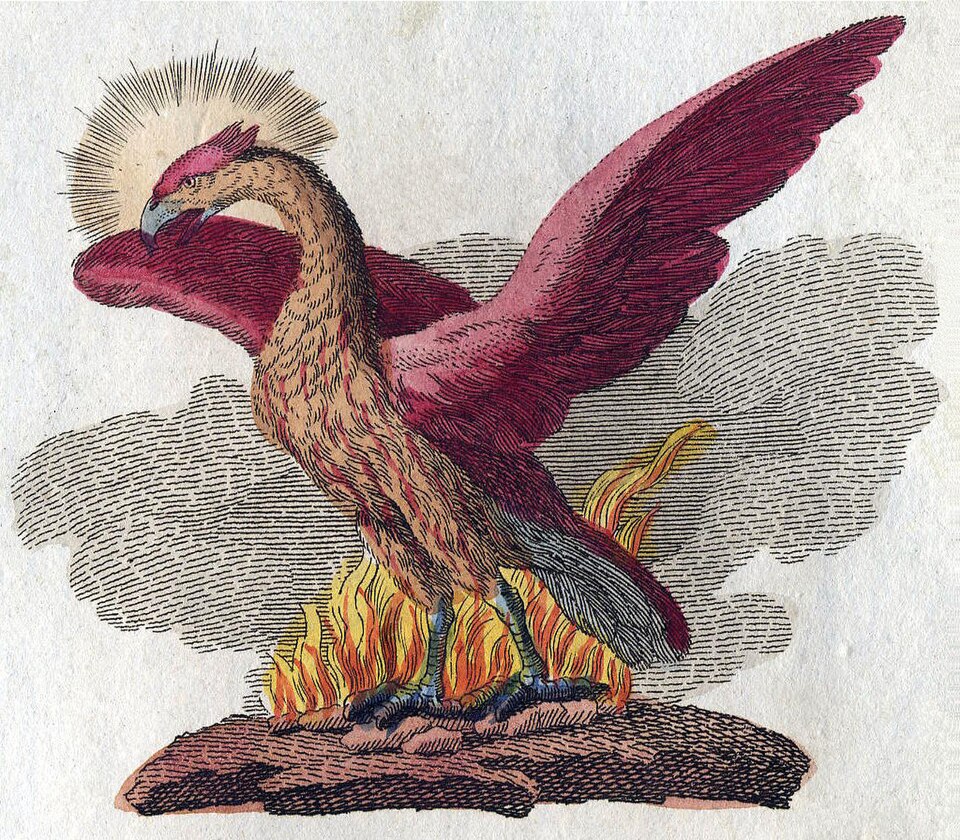
The title of that Christian Science Monitor article about the near-death experience and last-minute rescue of Harper’s? “Lewis H. Lapham: Heart of a Phoenix.”
Flip the pages of the calendar forward eighteen years to 1998, the year I joined Lapham’s editorial staff at Harper’s. That spring, when not anguishing over his monthly column or taking a pencil to a manuscript he’d acquired, Lewis was editing an anthology that would, he hoped, serve as the prototype for a more ambitious editorial project he’d been dreaming of, a new quarterly magazine of history and ideas.
Titled The End of the World, that 1998 anthology collected apocalyptic readings and images that Lewis and his editorial collaborator, classicist Peter Struck, had scavenged from humanity’s collective inheritance. For a frontispiece, they selected Dürer’s The Four Horsemen of the Apocalypse. For an opening entry, they chose the flood story from The Epic of Gilgamesh. After the flood, other ancient nightmares followed as relentlessly as the plagues of Egypt or the revelations of John. Sodom burned, Atlantis drowned, the Athenians besieged Melos, putting to death all the grown men. Later entries delivered more recent visions of hell—those of Siegfried Sassoon in the Hindenburg Line, those of John Hersey in Hiroshima.
Lapham and Struck orchestrated three sequential movements, as if human history were a doomsday symphony—Part I: The Ruins of Empires; Part II: The Fall of Nations; Part III: The Twentieth Century: The End in a Void. How to end this anthology of endings? Put a final finis on this millenarian grand tour through the wreck of time?
They did so with a collage of documents from their own present day, those fin-de-siècle, fin-de-millénaire years of the late 1990s, when the 21st century was still a dream, and whether the dream would be good or bad was yet to be determined. Their terminal collage included, for instance, an excerpt from a speech Bill Clinton gave on “The Coming Anarchy” and an index of recently published titles beginning with the phrase “The End of . . .” (The End of Nature, The End of History). Thereby, this collage of documents—modeled on the Harper’s Readings section, which Lapham had invented in 1984—invited readers to consider the new by the light of the old.
I mention that out-of-print 1998 prototype because, although Lewis always referred to the Quarterly as a magazine, it has been, since its inception, more bookish and booklike than other magazines. It is a chimerical hybrid of the bookish and the periodical, a quarterly anthology as well as a quarterly magazine.
Nine years after the publication of its prototype, when he brought the Quarterly into existence, Lewis hoped it would provide an antidote to presentism, and to the clamor of the attention economy, and to the flickering evanescence of digital media. Each issue—perfect bound, printed in four colors on acid-free paper, artfully edited, made to last—was a defiant affirmation of print culture, like a library and museum gallery miniaturized between two covers. Pick up a copy of the Death issue, and you would have the materials with which to compose—using the methods of Montaigne, among the issue’s contributors—an essay on mortality.
We remain as committed as ever to print culture and to publishing future print issues, but the Quarterly’s revival has had to rely this year on its podcast and website. Though beautifully designed and edited with care, the Quarterly’s website has always served as an accompaniment to the print magazine. It has never been “monetized.” Visitors to laphamsquarterly.org are not confronted by a paywall, or by ads. The Quarterly was not built to be a digital publication. Of necessity, it has, for now, become one.
In 2023, the Quarterly might well have recovered from the economic shocks of the pandemic, as other magazines did, had the end of the pandemic not coincided with the end of Lewis Lapham’s life. He died two years ago this July. Among his last wishes was that the Quarterly survive. Right up to the end, he believed it could. After all, he’d seen a magazine survive a near-death experience before, in the summer of 1980.
A year ago, with a phoenix’s heart, a team of editorial volunteers set out to honor Lewis Lapham’s wishes by reviving the Quarterly, beginning with the website and podcast. The debts the Quarterly had incurred during the pandemic—though far, far smaller than those that had nearly sunk Harper’s Magazine—made it impossible to publish new issues. Yet unable to fulfill print subscriptions, we resolved to keep every reading we published and every episode of the podcast we released available for free to all. To pay down the Quarterly’s pandemic debts, we hoped to rely on back issue sales and donations.
These hopes were not misplaced. Since March 2025, when we reopened our back-issue store, thousands of readers have purchased thousands of back issues. Nine issues out of the fifty-seven published between 2008 and 2023 have now sold out. Thanks to those who’ve donated or purchased back issues, we have since the summer of 2024 cut the pandemic debts we inherited by more than half.
On our website, thanks to the generosity of authors and publishers, whose support for the Quarterly has been deeply moving, and encouraging, we’ve published several dozen new readings—tributes to Lewis Lapham; an oral history of Lewis Lapham’s “Sea Stories”; a memoir by Lewis Lapham’s editorial mentor, Otto Friedrich; poetry translated from Greek, French, and Anglo-Saxon; many essays, by writers, critics, classicists, literary scholars, historians. We’ve published feature-length journalism; new fiction by our editor-at-large, Francine Prose; archival documents about Baldwin and by Twain; commentary on Moby Dick and the history of the sea. Artists, the estates of artists, and the curators of museum collections contributed images to the cause.
Above all, the Quarterly’s revival has depended on the many thousands of readers and listeners who like us and, like our founding editor, wished to see the Quarterly survive.
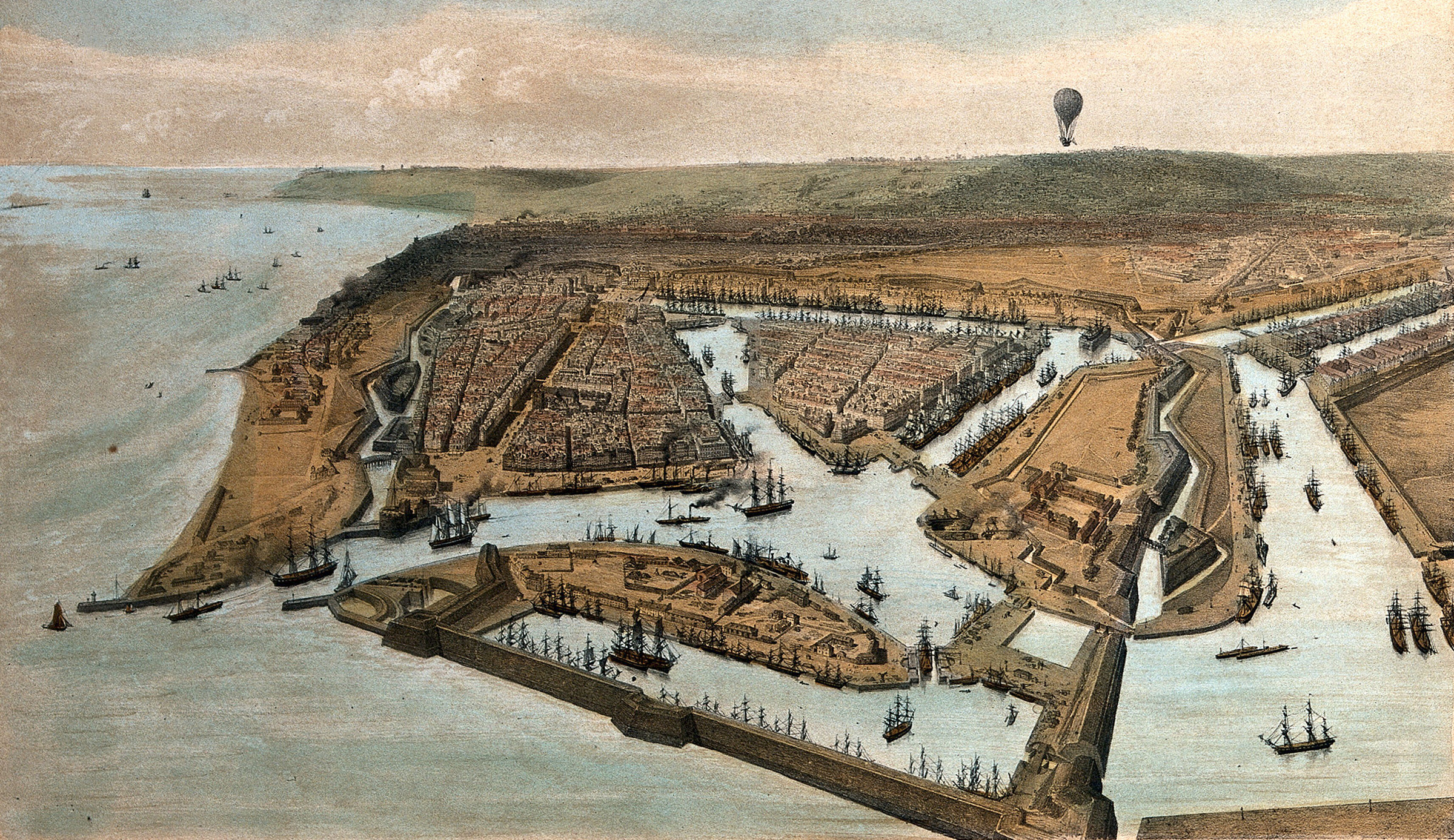
When talking about Lapham’s Quarterly, I have this past year found myself reaching for nautical and aeronautical metaphors, of which I am perhaps overly fond. I’ve likened the Quarterly to a sailboat in irons, or to a ship stranded on some sandbar or shoal, or to a ship transiting the Strait of Messina, steering perilously “between the Scylla of pandemic-related financial distress—no newsstand sales, no Decades Ball, high inflation—and the Charybdis of its founding editor’s failing health.” Since last June, I’ve sometimes compared the Quarterly to a pedal-powered flying machine. And all of us on the volunteer editorial team—during lunch hours, on nights and weekends—have been pedaling. More recently, corresponding with an author about a future episode of The World in Time, my imagination turned to an earlier period in the history of flight. Editing the Quarterly without an editorial budget, I told my correspondent, has felt like piloting a hot air balloon: nice view, and you can ride the thermals, which is exhilarating, but it’s hard to steer, or get enough sleep.
Bard College’s Hannah Arendt Center for Politics and Humanities has offered us needed institutional support this past year, but before the Quarterly can move to its new anchorage by the Hudson, we must pay off the dwindling remainder of our debts. Even under Bard’s stewardship, to publish new issues, the Quarterly will depend, as it always has, on subscribers and donors.
Which is why, in the second year of the Quarterly’s revival, we are asking for your support. In 2024, we slashed our operating costs. All donations and all purchases of back issues will help secure the Quarterly’s future. Starting this summer, you can also support the Quarterly by subscribing to our Substack at laphamsquarterly.substack.com.
The essays and readings published on our website will remain free and available to all, as will our weekly Back Matter newsletter. We will keep releasing free episodes of The World in Time sponsored by advertisers. Much of what we publish on the Lapham’s Quarterly Substack will also remain free. But for $5 a month, subscribers will unlock everything we publish, including unabridged, ad-free episodes of The World in Time.
And we have exciting news: in partnership with our friends at Aboard, a firm co-founded by Paul Ford—editor, novelist, award-winning magazine writer, technologist, creator of the legendary Harpers’s Magazine digital archive—we are this summer building a searchable, digital archive of our own. Aboard is a New York City-based AI strategy consultancy “that puts humans first.” We will be sharing more about the project in coming weeks, but since readers have been asking for digital editions of the Quarterly, we wanted you to know that they are in the works and on the way. Soon anyone with an annual subscription to the Lapham’s Quarterly Substack will be able to read all fifty-seven back issues on a desktop, laptop, tablet, or phone.
If you’ve enjoyed Lapham’s Quarterly this past year—the new episodes of The World in Time, the new readings that accompany them—and would like the revival of Lapham’s Quarterly to continue, please consider donating, purchasing back issues before they sell out, or signing up for a paid Substack subscription.
If between five and ten percent of all readers and listeners contributed $50 this year, we would be free of the pandemic debts we inherited in 2024. If a quarter of all readers and listeners contributed $50, we would be able to restart the presses, resume the publication of print issues, beginning with the Energy issue, the last one Lewis Lapham edited. That has been the goal, the wish, that has guided our work this past year: we are determined to keep going until the Energy issue has reached the mailboxes of subscribers.
If you’ve already donated or purchased back issues, we thank you. You made the revival of Lapham’s Quarterly possible. With your support, we will, with a phoenix’s heart, keep the revival going in the year to come.