Detail from Aspects of Negro Life: From Slavery to Reconstruction, by Aaron Douglas, 1934. The New York Public Library Digital Collections.
“The canon raised Toni Morrison,” says Namwali Serpell on this episode of The World in Time. “The canon is how she became who she is. Faulkner, Woolf, Shakespeare. She is much more interested in taking what’s there and reading it accurately, honestly. Let us be clear-minded and clear-sighted about what is there. But we don’t need to destroy it. And in fact, the Melville I read after reading Morrison’s analysis of the whiteness of the whale is a richer Melville.”
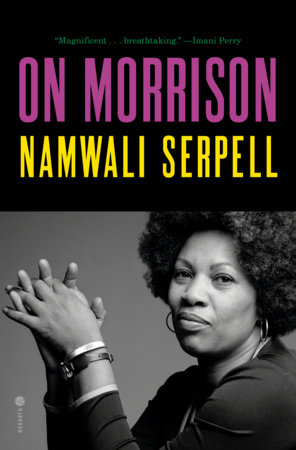
This week on the podcast, Donovan Hohn speaks with novelist and literary critic Namwali Serpell about her new book, On Morrison, in which Serpell takes readers on a guided, chronological tour of Toni Morrison’s fiction and criticism. The conversation touches on Morrison’s literary modernism; her surprising affinities with Vladimir Nabokov; her water imagery; her enchanting way with metaphor; her transformation of historical materials; her religious faith; her study of Greek tragedy and African literature; her participation in “the canon wars”; her ardent commitment to the freedoms conferred by the First Amendment, and her equally ardent opposition to what—in her 1993 Nobel Prize acceptance speech, published in the Means of Communication issue of Lapham’s Quarterly—Morrison called “dead language”: language that “thwarts the intellect, stalls conscience, suppresses human potential,” and “cannot form or tolerate new ideas.”
The ad-free, unabridged edition of this episode, available on the Lapham’s Quarterly Substack, concludes with an epilogue about Morrison’s Paradise, the final novel in the trilogy—Morrison’s Divine Comedy—that begins with Beloved.
Lapham’s Quarterly brings voices from the past up to the microphone of the present. Back issues are available for purchase on our website. To subscribe to our new digital archive, visit the Lapham’s Quarterly Substack. To make a gift, visit the donation portal hosted by Bard College’s Hannah Arendt Center for Politics and Humanities.