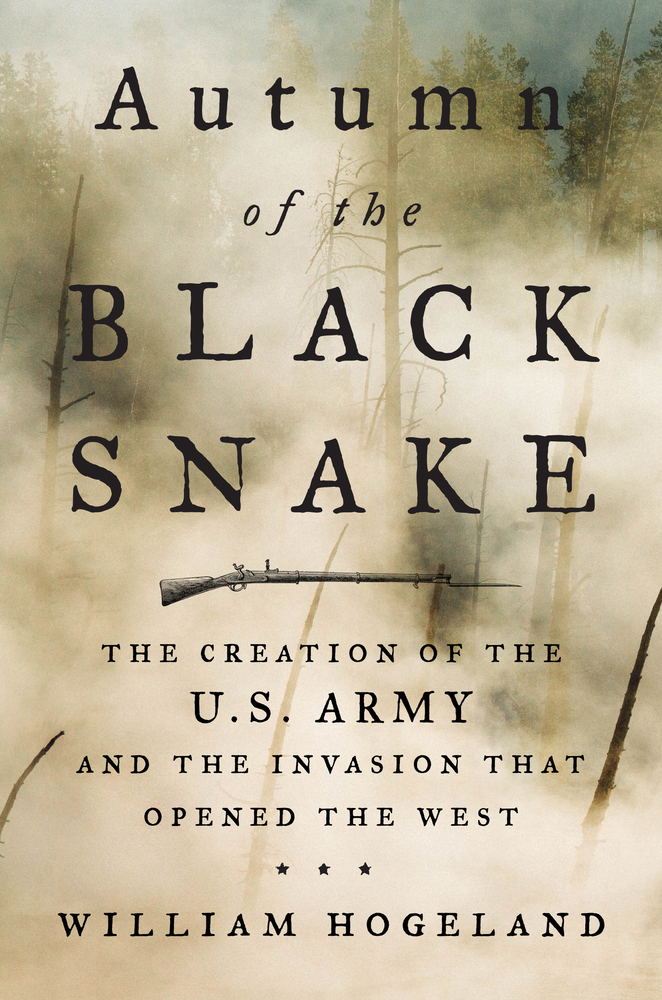
In 1791 an American military expedition led by General Arthur St. Clair to assert U.S. claims in the region north and west of the Ohio River was attacked by a confederation of Shawnee, Miami, and Delaware Indians that hoped to stop the country’s westward expansion. With nearly one thousand U.S. casualties, the American defeat was the worst the country would ever suffer at native hands. Americans were shocked, perhaps none more so than their commander in chief, George Washington, who saw in the debacle an urgent lesson: the United States needed an army.
Lewis H. Lapham talks with William Hogeland, author of Autumn of the Black Snake: The Creation of the U.S. Army and the Invasion That Opened the West, about the United States’ first standing army and its victory over the coalition of native forces that sought to halt the country’s expansion.
Thanks to our generous donors. Lead support for this podcast has been provided by Lisette Prince through the EJMP Fund for Philanthropy. Additional support was provided by James J. “Jimmy” Coleman Jr.