Detail of mural by artist Alec Monopoly at 7769 Melrose Avenue, 2012. Photograph by Carol M. Highsmith. Library of Congress, Prints and Photographs Division.
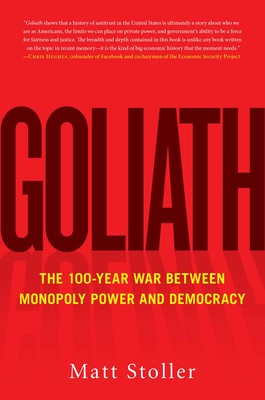
“There are many arguments for what is at the root cause of our current social dysfunction,” journalist Matt Stoller writes at the beginning of his book Goliath: The 100-Year War Between Monopoly Power and Democracy. “Various explanations include the prevalence of racism, automation, the rise of China, inadequate education or training, the spread of the internet, Donald Trump, the collapse of political norms, or globalization. Many of these explanations have merit. But there’s another much simpler explanation of what is going on. Our systems are operating the way that they were designed to. In the 1970s, we decided as a society that it would be a good idea to allow private financiers and monopolists to organize our world. As a result, what is around us is a matrix of monopolies, controlling our lives and manipulating our communities and our politics. This is not just happenstance. It was created. The constructs shaping our world were formed as ideas, put into law, and now they are our economic and social reality. Our reality is formed not just of monopolized supply chains and brands, but an entire language that precludes us from even noticing, from discussing the concentrated power all around us.”
Stoller discusses the backstory and history of this idea on this episode of The World in Time.
Lewis H. Lapham speaks with Matt Stoller, author of Goliath: The 100-Year War Between Monopoly Power and Democracy.
Thanks to our generous donors. Lead support for this podcast has been provided by Elizabeth “Lisette” Prince. Additional support was provided by James J. “Jimmy” Coleman Jr.