Title page of the first issue of The South Polar Times, by Dr. Edward A. Wilson, 1902. Wikimedia Commons.
“An 1833 review of the only book of poetry Hartley [Coleridge] published in his lifetime praised the verse for embodying ‘no trivial inheritance of his father’s genius,’ but also observed, ‘It is an old saying that the oakling withers beneath the shadow of the oak.’ I have long been interested in what makes some oaklings thrive and others wither, because, in a minor way, I’m an oakling myself. My father was a critic and an essayist. My mother was a war correspondent. The upside of this print-smudged parentage was that I was raised in a home with seven thousand books, plenty of literary conversation, and empirical evidence that writing was something you could actually do for a living.”
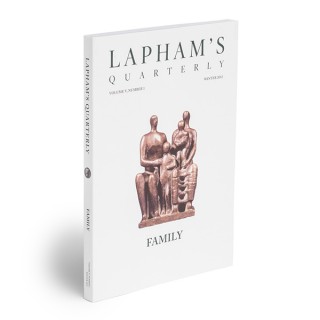
This week on the podcast, Donovan Hohn speaks with essayist Anne Fadiman about the history of the essay since Montaigne and the art of making essays out of history; about teaching essay-writing to college students; and about what Virginia Woolf called “the Common Reader.” The conversation addresses the title essay—about a pet frog named Bunky—of Fadiman’s new collection, Frog and Other Essays, but Hohn and Fadiman spend the most time with two other essays—one that originally appeared in the Family issue of Lapham’s Quarterly, on poet and essayist Hartley Coleridge, who grew up in the shadow of his famous father, Samuel Taylor, and one first published in the Harvard Review, about the South Polar Times, a magazine whose editors, contributors, and original readers were all members of the polar expeditions led by Robert Falcon Scott.
WORKS CITED
(In order of mention.)
Anne Fadiman. Frog: And Other Essays. Foreword by Sam Anderson. New York: Farrar, Straus and Giroux, 2026.
Anne Fadiman. The Spirit Catches You and You Fall Down: A Hmong Child, Her American Doctors, and the Collision of Two Cultures. New York: Farrar, Straus and Giroux, 2012.
Anne Fadiman. At Large and At Small: Familiar Essays. New York: Farrar, Straus and Giroux, 2008.
Anne Fadiman. “The Oakling and the Oak: How the prodigal son of Samuel Taylor Coleridge faced his demons, and his father’s shadow,” Lapham’s Quarterly, Winter 2012: Family.
Anne Fadiman. Ex Libris: Confessions of a Common Reader. New York: Farrar, Straus and Giroux, 2000.
Mark Twain. Collected Tales, Sketches, Speeches, & Essays: Volume 2, 1891-1910. Edited by Louis J. Budd. New York: Library of America, 1992.
Michel de Montaigne. What Do I Know?: Essential Essays. Translated by David Coward and introduced by Yiyun Li. London: Pushkin Press Classics, 2025.
E.B. White. Essays. New York: Harper Perennial, 1999.
Joan Didion. Slouching Towards Bethlehem. New York: Farrar, Straus and Giroux, 2008.
John Updike. Assorted Prose. New York: Random House, 2012.
Virginia Woolf. The Common Reader. Boston: Mariner Books, 2002
Yiyun Li. “Some Have Yoga. I Have Montaigne,” The Atlantic, September 4, 2023.
Thucydides. The History of the Peloponnesian War. Translated by Rex Warner and introduced by M.I. Finley. New York: Penguin Classics, 1954.
Virgil. The Aeneid. Translated by Robert Fagles and introduced by Bernard Knox. New York: Penguin Classics, 2008.
Samuel Taylor Coleridge. “Frost At Midnight.” In Sibylline Leaves: A Collection of Poems. London: Rest Fenner, 1817.
Samuel Taylor Coleridge. “The Nightingale; A Conversational Poem, Written in April, 1798.” In Lyrical Ballads, with A Few Other Poems. London: Printed for J.&A. Arch, 1798.
Samuel Taylor Coleridge. Christabel: Kubla Khan, A Vision; The Pains of Sleep. London: Printed for John Murray by William Bulmer and Co., 1816.
William Wordsworth. “Ode: Intimations of Immortality from Recollections of Early Childhood.” In Selected Poems. Edited and introduced by Stephen Gill. New York: Penguin Classics, 2005.
William Wordsworth. “To H.C., Six Years Old.” In Selected Poems. Edited and introduced by Stephen Gill. New York: Penguin Classics, 2005.
Hartley Coleridge and Derwent Coleridge. Poems, With A Memoir of His Life by His Brother. Edited by Derwent Coleridge. London: Edward Moxon, 1851.
Joseph Cornell. Soap Bubble Set. ca. 1948. Box construction. The Joseph and Robert Cornell Memorial Foundation. Art Institute Chicago.
Elizabeth Bishop. Poems: North & South–A Cold Spring. Boston: Houghton Mifflin Company, 1955.
Robert Lowell. Life Studies and For the Union Dead. New York: Farrar, Straus and Giroux, 2007.
Anne Fadiman. “Coleridge the Runaway.” In At Large and At Small: Familiar Essays. New York: Farrar, Straus and Giroux, 2008.
Samuel Taylor Coleridge. Collected Letters. Edited by Earl Leslie Griggs. Oxford: Oxford University Press, 2002.
The World’s Best Essays, from the Earliest Period to the Present Time. Edited by David J. Brewer. St. Louis: Ferd. P. Kaiser, 1900.
Hartley Coleridge. “Books and Bantlings.” In Essays and Marginalia. Edited by Derwent Coleridge. London: Edward Moxon, 1851.
Annie Dillard. “An Expedition to the Pole.” In Teaching a Stone to Talk: Expeditions and Encounters. New York: Harper Perennial, 1988.
Evan S. Connell. The White Lantern & Other Pursuits. London: Pimlico, 2011.
Mary Shelley. Frankenstein: Or The Modern Prometheus, The 1818 Text. Introduced by Jeanette Winterson. New York: Vintage Books, 2025.
Walter Scott. Waverley. Edited by Peter Garside and introduced by Ian Duncan. New York: Penguin Classics, 2012.
Robert Falcon Scott. The Voyage of the Discovery. Illustrated by E.A. Wilson. Cambridge: Cambridge University Press, 2014.
James Thurber. “The Night the Bed Fell.” In My Life and Hard Times. New York: Harper Perennial, 1999.
Robert Falcon Scott. Journals: Captain Scott’s Last Expedition. Edited by Max Jones. Oxford: Oxford University Press, 2008.