The World in Time

Adrian Goldsworthy

Friday, November 24, 2017

Ancient Rome

Ancient Rome, by Giovanni Paolo Panini, 1757. The Metropolitan Museum of Art, Gwynne Andrews Fund, 1952.

“Peace is not an absolute, but relative,” Adrian Goldsworthy reminds readers at the beginning of his book Pax Romana: War, Peace, and Conquest in the Roman World. So what does “Roman Peace” look like once you zoom in on the details and recall all the conquering? It’s complicated, the historian shows, and although this ancient peace feels very different from all the world we live in now—and all the history these moments bookend—there’s also no doubt that these layers of conquest and pockets of peace shaped the world in monumental ways.


Lewis H. Lapham talks with Adrian Goldsworthy, author of Pax Romana: War, Peace, and Conquest in the Roman World.


Thanks to our generous donors. Lead support for this podcast has been provided by Elizabeth “Lisette” Prince. Additional support was provided by James J. “Jimmy” Coleman Jr.
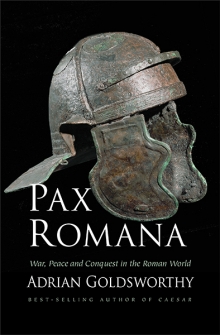

Discussed in this episode

Pax Romana

More Podcasts

September 15, 2011

The World in Time:

Green Mountain Boy

Willard Sterne Randall and Lewis Lapham talk about the life and adventures of Ethan Allen.  More

The 7th New York Militia Regiment marches down Broadway, an illustration from Harper’s Weekly, 1861.

August 18, 2017

The World in Time:

John Strausbaugh

Lewis H. Lapham talks with John Strausbaugh, author of City of Sedition: The History of New York City During the Civil War. More

October 11, 2019

The World in Time:

Harlow Giles Unger

Lewis H. Lapham speaks with the author of Thomas Paine and the Clarion Call for American Independence. More

Slumbering Fog

December 08, 2017

The World in Time:

Gordon S. Wood

Lewis H. Lapham talks with Gordon S. Wood, author of Friends Divided: John Adams and Thomas Jefferson. More

December 22, 2021

The World in Time:

David Wengrow

Lewis H. Lapham speaks with the coauthor of The Dawn of Everything. More

April 28, 2017

The World in Time:

John Micklethwait

Lewis Lapham talks to John Micklethwait about rethinking the machinery of the state in the twenty-first century. More