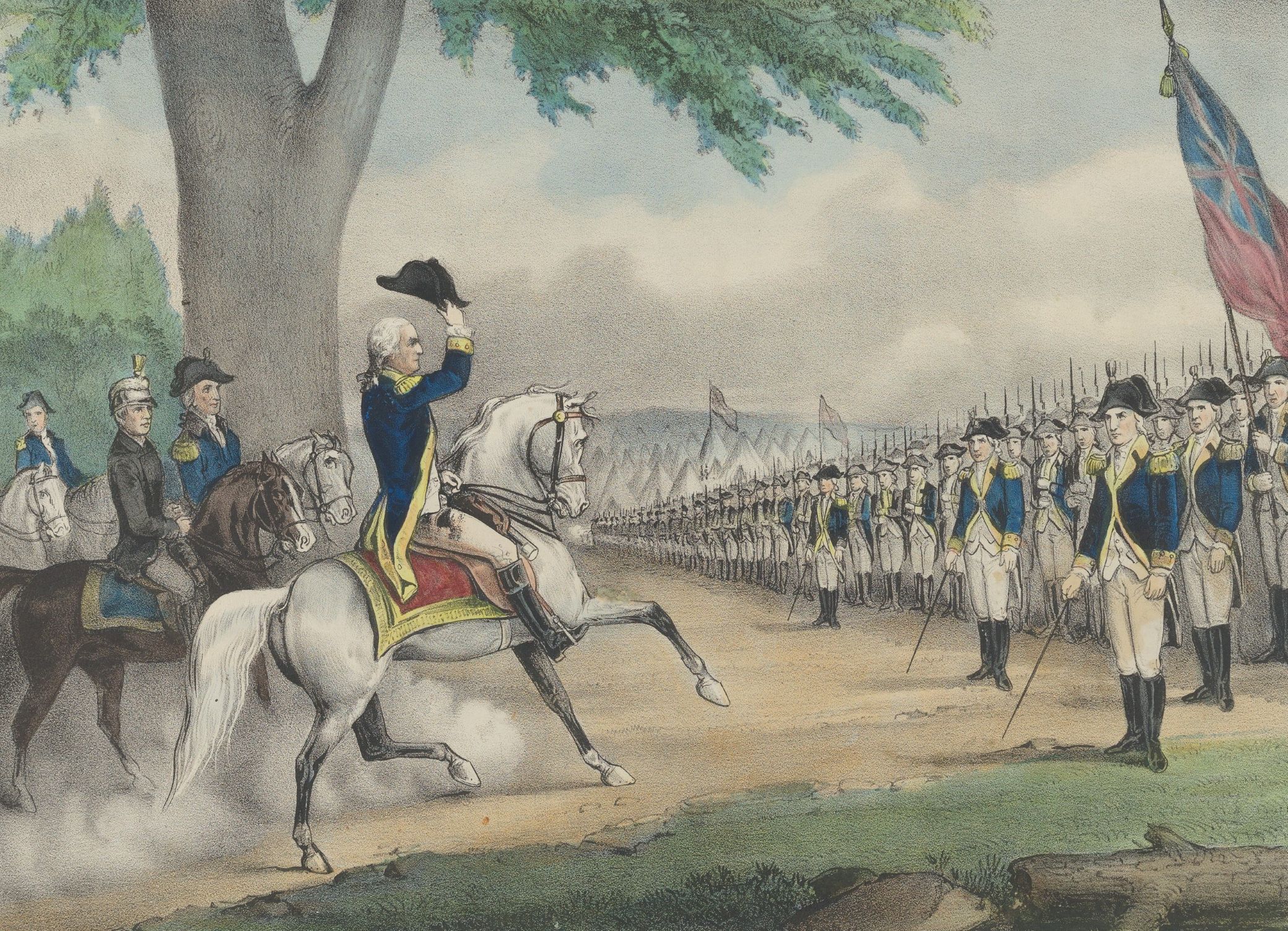
Washington Taking Command of the American Army, 1775. Currier & Ives, Metropolitan Museum of Art. Bequest of Adele S. Colgate, 1962.
• “Ultimately, the American Revolution was hardly an anti-colonial movement…the argument for independence was a resistance to the British Proclamation of 1763 that said that colonists cannot move beyond the Appalachian Mountains. And in the end, they were pushing against British limitations on expansion. In other words, they wanted more empire for themselves.” (Democracy Now)
• “But the bicentennial took place at a time when the moment of maximum danger for the republic seemed to have passed. Today, that moment may not have yet arrived.” (Harper’s)
• “A history of five families in El Paso,” the “new Ellis Island.” (New York Review of Books)
• On the death of the American Constitution: an interview with Jill Lepore. (Jacobin)
• A road trip through the country’s historic sites. (Los Angeles Review of Books)
• “Who owns the Declaration of Independence?” (The New Republic)
• A history of separating church and state. (The Conversation)
• “What, to the colonized, is the Fourth of July?” (Prism)
• This week in obituaries: Lam Wing-kee, Victor Willis, K. Bhagyaraj, Tony Brown, Ann Blyth, Penelope Keith, Les Mills, Khadijah Farrakhan, Colette Shulman, Charles H. Townsend, Abdul Ahad Momand, John Stockwell, Mignon Dunn, Om Malik, Salim Al-Ashqar, and Rayan al-Jazeen.