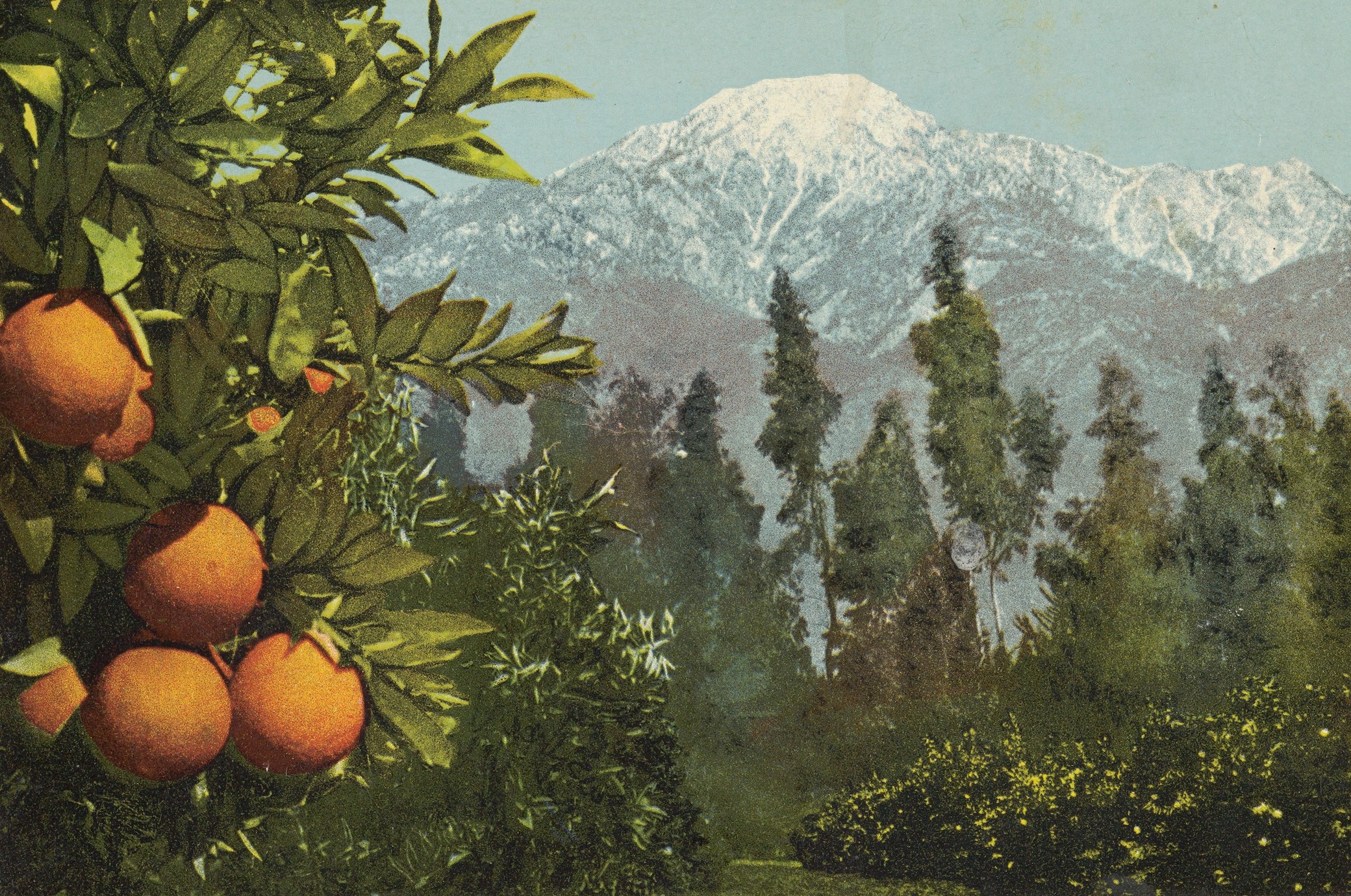
A California Anomaly, Snow and Oranges, Pasadena, California, c. 1905. Detroit Publishing Company. Metropolitan Museum of Art, Jefferson R. Burdick Collection, Gift of Jefferson R. Burdick.
• “What the Middle Ages can teach us about burnout.” (BBC)
• The weird history of “weird.” (Dead Language Society)
• Learning from a Renaissance architect to gain an “agility of perspective” in contemporary decision-making. (The Reader)
• Hua Hsu on the future promised by the Bay Area of his childhood. (Places)
• “But in our present era of competing certainties—nationalism and religious zealotry on one side; self-assured claims to justice and expression on the other—the quiet heroism of ‘Decline and Fall’ is its insistence that the past will not confirm your most deeply held beliefs. It will probably confound them.” (New York Times)
• “On the Possible Existence of Multiple Homers.” (Literary Hub)
• The “uncanny realism” of Francisco de Zurbarán. (The Daily)
• Introducing “Notations,” a new series on historical figures’ personal notebooks. (Noted)
• “What did Kraus see in Vienna’s literary coffeehouses that so disturbed him? He did not know the depth of anger and resentment in the Balkans. Yet he understood the fractured and inward-looking attitudes of Viennese writers as having disastrous consequences.” (Aeon)
• This week in obituaries: Lindsey Graham, Jayden Adams, Sam Neill, Dave Kendall, Pat Oliphant, Brenda Fricker, Wai Ching Ho, Randolph Manooth, Shi Nan-sun, Clara Ester, Hal Williams, Guy Scott, Phil Regan, Janice McNair, Peter Van Norden, Antonio Rattín, Sheikh Hamad bin Khalifa Al Thani, and at least seven people killed by an Israeli strike on a funeral in Gaza.