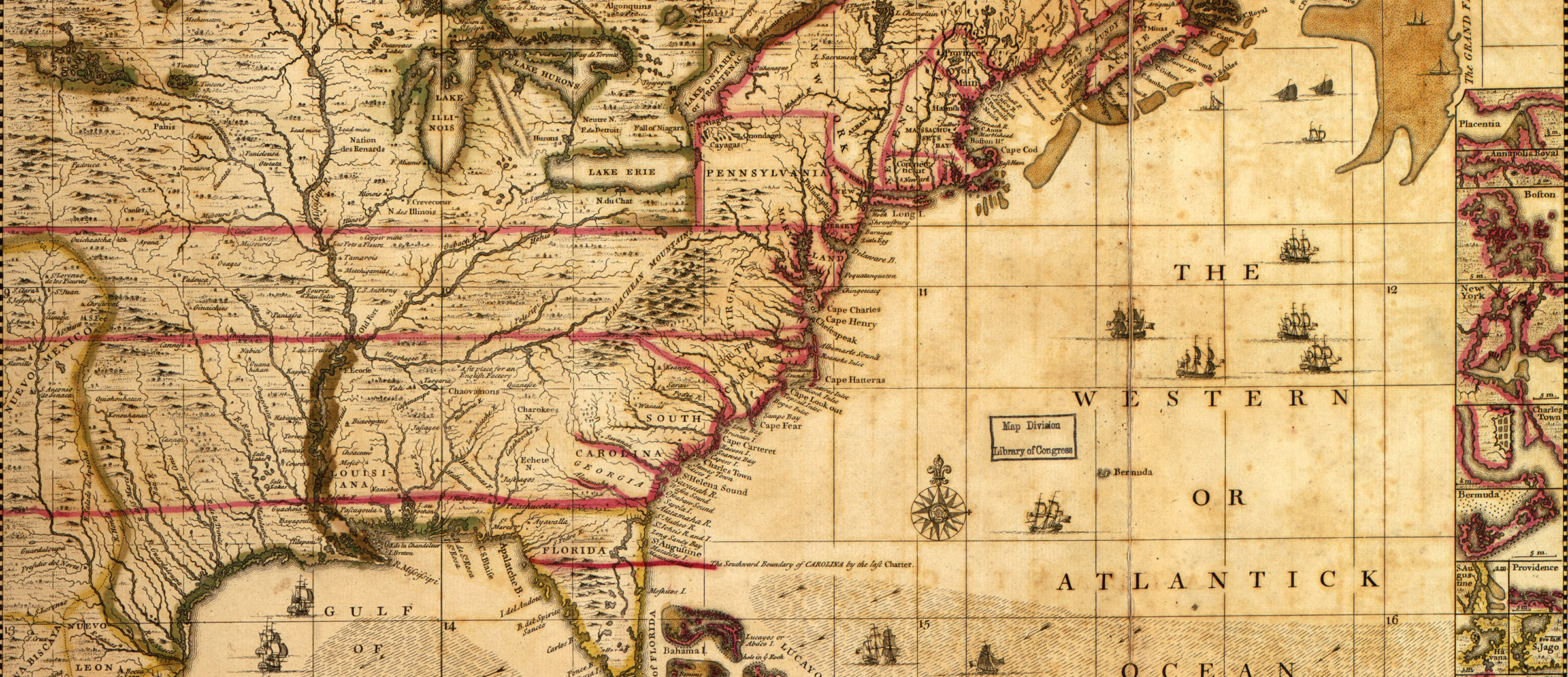
Quick with math, punctilious in mapping and documentation, and breathless for a change in status, George Washington crossed the Blue Ridge for the first time at the age of sixteen as a surveyor for the Fairfax family in its land investments in the Shenandoah Valley. Soon he was relied on by that most powerful family of the Northern Neck as a can-do dogsbody, a natural frontiersman always up for a job. With no real wealth of his own, George had hit on another time-honored way of getting ahead: making himself indispensable to the wealthy.
Far more than just a good surveyor, young Washington had an eye, it turned out, for fertility. He studied botany and geology and made close observations of timber, foliage, and water sources; he could identify the easiest places to clear forest and the best places to plant crops. He thus became adept at picking out the most valuable land for his principals and leaving the rest for others not so well advantaged. His surveying and appraising skills brought him income, and starting small, the youngster also picked out a few tracts of some of the better acreage for himself.
That changed everything. Before he was twenty, George Washington had bought and sold and parlayed himself into nearly three thousand acres of prime land. He still hadn’t come fully into what he viewed as his relatively paltry inheritance when he began making his own way instead. His father hadn’t left him much, but he was much like his father: always looking, always assessing, always seeking the advantage that others might have missed. If he could amass enough land this way, he might build plantations, grow tobacco, marry well, become a burgess, join the Ohio Company, maybe even buy an officer’s commission in the British army.
George was becoming punctilious in transactions, too, with an attention to detail and a single-mindedness in the hunt for advantage that could verge on the maniacal. Now that he’d begun to gain, there wasn’t much else on his mind. Prospects were lengthening, and the view lay westward.
Thus when George Washington first saw the Ohio River, he was doing what he’d become expert at doing: an errand. Twenty-one now, huge, fearless, and immensely strong, he’d already gone deeper into the West than many of the Northern Neck gentry who invested in the Ohio Company. On this particular errand, George was officially in the service not of the Fairfaxes but of the new lieutenant governor of Virginia, Robert Dinwiddie. Yet Dinwiddie, a highly focused man, was in the service of the Ohio Company, and the company was in the service, in turn, of Dinwiddie. Land speculation and government were combining, in Virginia, in peculiar ways that would come to define George Washington’s lifelong relationships to both.
Dinwiddie had seen a remarkable opportunity for personal gain in the great physical distance between him and those he reported to at home in the ministry. Though a royal official, he had become one of the Ohio Company’s biggest investors, and he was able to use his reports to the ministry to advance the company’s aims. Virginia burgesses who weren’t members of the Ohio Company had western expansion schemes of their own, and they objected to this untoward alliance of royal clout and personal speculation. But along with his commercial allies among the burgesses, Dinwiddie had also stacked his council—it served as the Virginia legislature’s upper house—with Ohio Company members. He would be hard to stop.
The problem for Dinwiddie was that the company’s investment scheme had stalled. Because Indians lived there, and because New France was increasing its activity in the Ohio headwaters, the region remained too dangerous to attract American settlers. And it was settlers, not investors, who were expected to clear the land and add value. What the investors needed was a military force to police the region and provide security, and Dinwiddie had discerned a strategy for leveraging his governorship to that end.
Reporting to Dunk Halifax, the governor started painting pictures of French aggression across the Appalachians and reminding the secretary of the necessity of fending it off. In reality, with the end of the global conflict in which Lawrence Washington—George’s older half brother—had served, perennial British–French hostility had entered a rare lull. The treaty ending that war had given both powers a right to trade in the Ohio Country, and it wasn’t clear that the French had been especially active there, except in defensive reaction to the novelty of the Ohio Company grant; the French certainly weren’t looking to clear and settle the region, as the Virginians were. And yet to advance the settlement project, Dinwiddie and the Ohio Company needed a military presence in the West, and in his reports to Dunk Halifax the governor invoked French aggression to make a case for providing that presence.
Dinwiddie also proposed sending diplomats to the Six Nations of the Iroquois. That confederation, strung east to west across New York and Pennsylvania, claimed hegemony over Indians west of the Ohio and had long held a precarious balance of power between France and England in the North American fur trade: Iroquois diplomats were known at Whitehall and Versailles, and Dinwiddie wanted their support for England and Virginia against both France and French-allied Indians of the West. He wrote to other colonial governors too, asking them to raise provincial troops to lend Virginia military support for resisting supposed French aggression. Playing down the Ohio Company’s plan of western settlement and his personal investment in it, Dinwiddie framed French movement in the Ohio valley as an unprovoked danger to Virginia, to the English colonies as a whole, and to British sovereignty in North America, requiring an assertive military response.
Meanwhile, he was making every effort to give New France and its Indian allies the impression that this burst of military activity came not from Ohio Company policy, not even from his own policy as Virginia governor, but at the command of the king of England himself. That reading could be expected to further rile the French, giving support to his story of their aggression.
The time it took for information to travel between London and Virginia gave Dinwiddie a lot of room for sowing confusion, and his schemes were kept more or less secret from burgesses and council members who weren’t Ohio Company members.
As for the majority of Virginians, they had no interest—financial, political, or emotional—in developing land west of the mountains. This was an upscale, inside affair, and Dinwiddie saw in the Fairfax family connection George Washington a likely young fellow for executing the first step in his strategy.
Washington’s errand for Dinwiddie, taking him farther west than ever before, was to order the French to stop making confrontational moves west of the mountains. New France’s motives might have been largely defensive; still, the French had deployed an expedition on the Ohio River to document their claim to the Ohio Country. At the mouth of each Ohio tributary, the party had nailed to an especially big tree a copperplate imprinted with French royal arms and buried a lead plate below the tree stating a claim on the land. They’d started building new forts, also in reaction to American activity in the West: the French plan now was to string garrisons from the southern shore of Lake Erie down to the Ohio headwaters, blocking any aggression from the east. George Washington’s task was to visit the commanders of those new French garrisons and order them, in the name of the royal governor of Virginia and His Royal Majesty the king of England, to cease and desist.
He took the long, hard trip guided by a frontiersman named Christopher Gist, who had bought a big chunk of western land from the Ohio Company and explored, surveyed, and did other jobs for the company out in the woods. Washington and Gist climbed with a party of men and horses to the crest of the Appalachians, and then, as they descended, Washington began encountering value like nothing he’d ever seen. This country was precipitous, but the narrow valleys, his practiced eye told him, were deep with the richest kinds of soils. At last, from a high, forested ridge he gazed over the point of land where the muddy Monongahela and the fast-running Allegheny flowed together.
Here was the origin of the broad Ohio. The river made a big turn northward before dropping straight into the heart of the West. In the setting sun, the bends were distant glints. This point at the headwaters was ideally strategic for commanding access to the West. And the French hadn’t started a fort here yet. Washington quickly wrote as much to Dinwiddie.
His larger mission, though, was a failure. If Dinwiddie had expected the French fort commandants, dropped in on out of the woods by a big twenty-one-year-old, to tear down their forts, march their men up to Lake Erie, and sail up the St. Lawrence to Quebec, never to return, he wouldn’t have been much of a strategist. The French officers were provoked, predictably enough, and sent the young emissary back with the defiant words that Dinwiddie had been counting on hearing.
Washington and Gist, alone now, without even the support of packhorses, were on their way back toward Williamsburg through the deep snows of December when they were halted by the Allegheny. That fast river, choked with big, swirling ice chunks, wasn’t frozen enough to walk across. Though exhausted by hard travel, Washington was tough, Gist even tougher. Soon, standing on a raft of logs they’d cut from the forest—Gist had crossed many a river this way—the two men were gripping long, heavy poles, lifting and plunging them into the frigid water to maneuver around the moving ice.
They made it about halfway across when the raft was shoved by hard current against an ice pack. It jammed there. Washington was strong, but not stronger than Allegheny flow: pushing at the block, he lost his balance and toppled into the water.
He grabbed for the cut logs. With Gist’s help the youth heaved himself, his clothing sodden with icy water, onto the raft. Gist realized his own fingers were frostbitten. They were in trouble. They saw an island. Wading now, they made their miserable way to it. Somehow they got through that night without hypothermia. The river froze overnight; they crossed it the next morning and continued their journey to bring Dinwiddie the unsurprising news of French refusal to relinquish the Ohio Country.
Young George Washington, doing an errand. By now, he could handle pretty much anything. Yet even he had found this trip almost unbearably exhausting.
Still, he’d crossed the Appalachians. Most Ohio Company members knew the West as a portfolio position. Washington had been there, and he’d seen all that it was worth.
His next big move involved not just seeing the West but actually taking it. In the spring of 1754, Washington went back across the mountains, again on Dinwiddie’s orders in pursuit of the Ohio Company’s land interests. This time the mission wasn’t to order the French away. It was to force them out.
The news of French intractability that Washington had brought back from the forts meant Dinwiddie was now officially empowered by Dunk Halifax to call up militia for the defense of Virginia. Because the French response had been predictable, Dinwiddie had started calling militia up well before getting the news, and he’d already sent men out to the forested point at the Ohio headwaters, on Washington’s recommendation, with materials for building a fort under command of the Ohio Company’s chief of construction. Dunk Halifax didn’t know it, but when it came to the West, the company and the royal executive were identical. Dinwiddie published and publicized Washington’s reports from the scene, and finally scared the burgesses into funding some provincial troops; he got the governor of North Carolina to send troops as well.
Then, in a move surprising many both at the time and later, he made the twenty-two-year-old George Washington a lieutenant colonel and placed him in effective command of what in the end turned out to be about 160 men. Washington was to lead those men against the French in the Ohio Country.
Receiving this commission and command was the biggest thing that had happened to George Washington. Lawrence had died of tuberculosis the year before. George’s grief was great. His ambition remained undiminished; if anything, it was amplified, and with this military appointment he came close, if unofficially, to replacing his brother as commander of the Virginia militia. He’d already begun gaining land and status. Success in this operation might gain him not only further reputation but also the British army commission he coveted. In his lonely, uncompromising effort to gain manhood in terms dictated by the world he came from, George was achieving what had once seemed impossible. In some areas, he might actually surpass Lawrence.
His military objective was the strategic point at the Ohio headwaters that he’d seen on the first trip. The French had interrupted Virginia’s fort building on the point, won a skirmish, taken the ground, and built their own, far better fort. Neither Whitehall nor Versailles had been spoiling for a fight—given imperial alliances, such conflicts spread too easily now around the world—but the governor of New France, Marquis Duquesne, was as eager as his opposite number Dinwiddie not to avoid war, and he had the same tools as Dinwiddie for manipulating the bosses back home: distance, slow communication, and the ability to exaggerate danger. The French fort at the point was now named Fort Duquesne. Washington’s mission was to coordinate with anti-French Indians in the region, attack Fort Duquesne with Indian support, and force the French garrison to surrender.
Dinwiddie couldn’t possibly have expected the mission to succeed. There was no way a force of fewer than two hundred men could take a decent French fort, and these men were inexperienced Virginia volunteers, poorly fed and armed, led by a gigantic youth with ambition and enthusiasm to spare, and some reason for his increasingly high opinion of his own merits, but no knowledge of fighting or any sense of command. The operation didn’t even carry enough ammunition for an assault on a fort.
And yet exceeding what must have been Dinwiddie’s expectations, so spectacularly did Washington fail that not even Dinwiddie could have predicted the fallout. Trouble began even before the unit arrived in the vicinity of the headwaters. Washington was to make contact with Virginia’s ally Tanacharison, whose people, mostly Seneca transplanted to the West, lived nearby. Washington and Tanacharison already knew each other: Tanacharison had once enjoyed high status and commanded good fighters. Lately, however, claiming to represent all Indians in the region, he’d personally granted both the Ohio Company operator Christopher Gist and a Pennsylvania fur trader hundreds of thousands of acres of land around the headwaters. So, while the whites didn’t know it, Tanacharison’s credibility with other Indians had fallen to nearly zero. He had few fighters and no clout. What he did have was a plan for getting back on top.
In a message to Washington, Tanacharison rallied the Virginian to continue toward Fort Duquesne no matter what and save Tanacharison’s people from French menace. Washington, having climbed into the Alleghenies, soon had his exhausted men camped at a spot known as the Great Meadows, about sixty miles from the fort, a broad stretch of flattish, open ground in the otherwise steep and twisty country. There he received urgent word from Tanacharison that the French were nearby, in force, with plans to ambush Tanacharison’s people. Thus the opportunity for George Washington’s first battle presented itself.
Washington sent an official report back to Dinwiddie, informing him of his intention to find the French party, and while the scouts had numbered the party’s size at about sixty, Washington told Dinwiddie they’d numbered it at seventy-five. Leaving most of his force at the Great Meadows, on the morning of May 28 the Virginian and about forty of his men, along with Tanacharison and a handful of his, climbed the steep woodland toward the spot where Indian scouts had seen the French. Just before first light, the party quietly approached a glen below a high, rocky outcropping, a kind of shallow, one-sided ravine. Frenchmen were obviously down in that glen, sheltering below the rock. Their firelight could be seen; their voices could be heard. Tanacharison’s men snuck toward the glen on one side, Washington’s on the other.
Nobody would ever know for sure what happened next. In the upshot, the French—there were really only thirty-five of them—had surrendered, with ten dead and many wounded. Who fired first was not agreed on. It was generally agreed, however, or at least implied, by everyone except Washington himself, that during the sudden series of events he was unable to exercise any effective command at all.
The leader of the French party turned out to be Joseph Coulon de Villiers, Sieur de Jumonville. Under interrogation on the spot by Washington, Jumonville said he was traveling as a diplomat from Fort Duquesne, on his way to order the Virginians out of the region, just as Washington had ordered out the French a year earlier. Tanacharison told Washington that on the contrary Jumonville was leading a war party to ambush Tanacharison. But what Washington thought Jumonville was really doing there would come up only in the context of defending his reputation against a terrible charge. For while Washington was interrogating Jumonville, Tanacharison split Jumonville’s head with a hatchet, killing him. Jumonville was a diplomat. Or if he wasn’t really a diplomat, he was a prisoner of war, having surrendered. Anyway, there was no declared state of war. The execution was murder.
Or not. Others on the scene would say later that Jumonville died in the first musket fire. That story contradicted not only the murder story but also what others described as Tanacharison’s removing Jumonville’s brains and washing his hands in them, or eating some of them. He might have done that. Ritualized physical revelry in the body of a defeated enemy was common practice, and Tanacharison always claimed the French had boiled and eaten his father. Other reports would mention a French head impaled on a stick.
Washington denied all of it. In his descriptions of events, the first American shots came not from panicky Virginian tension, or by unfair Virginia ambush, but at his express order: the French had discovered the presence of the Virginians and Indians, ran for their guns, and fired; Washington ordered his men to fire in response; two volleys were exchanged; the French surrendered; Jumonville, already dead, was never a prisoner.
Such was Washington’s report. It put forth an order of events that nobody else there remembered.
Whatever really happened to Jumonville, further problems quickly ensued for Washington. Tanacharison’s next move was to send a secret message to the French commander at Fort Duquesne. The Virginians had surprise-attacked Jumonville’s party, Tanacharison told the French, and Jumonville had been executed by a musket shot to the head: the English had wanted to execute all the wounded Frenchmen, and would have done so, but for the Indians’ rushing to interpose themselves and prevent the murder.
Tanacharison had his own plan. He’d roped Washington into it. Dinwiddie and Duquesne weren’t the only ones trying to provoke a war between the British and the French in North America. Washington could now expect French reprisal.
Back at the Great Meadows, Washington meanwhile got busy in his tent writing versions of the story to reflect well on him and badly on Jumonville and the French. Reporting to Dinwiddie, he scoffed at length at the idea that the French party had been on a diplomatic mission. The young man’s biggest takeaway from the scene of Jumonville’s death would become one of the most quoted remarks of his youthful career. “I heard the bullets whistle and believe me, there is something charming in the sound,” he wrote to his younger brother.
All of this writing to shore up his reputation—to relatives, to Dinwiddie, to his own journal—was spoiled by what happened next. Washington considered his action at the glen a victory, and he expected an attack in response. He therefore ordered a stockade built on the Great Meadows and wrote to Dinwiddie for reinforcements. Although he’d arrived at the site unopposed, Washington vowed to Dinwiddie that sooner than give up an inch of what he’d gained, he’d fight with unequal numbers if he had to.
He looked on his completed stockade with pride: a circle of seven-foot-high uprights in palisade, surrounding a peaked-roof hut. He named it Fort Necessity and imagined it holding off a force of five hundred with ease.
Tanacharison had seen French forts. Now he was looking at a low cylinder of raw timber in a broad, open field within easy firing range of thick woods on all sides. Still, he brought about a hundred women and children onto the meadow and made them dependents of this so-called fort, putting a strain on Washington’s paltry resources.
Dinwiddie did meanwhile send reinforcements, but when they arrived at the Great Meadows, Washington saw they were just more of the untrained Virginians he was already saddled with. Then came some New Yorkers. They seemed even more down-at-the-heels, rowdy, and dissolute.
But the South Carolina provincial forces who joined Washington were, to him, the worst. These were crack troops. Their commander was only a captain, but he was commissioned directly by the Crown, and Washington’s commission as a colonel came from a colonial governor; he was militia. A royal commission outranked a militia commission, in the mind of the South Carolina captain but not in Washington’s. Neither man could get the other to report to him. The captain set up a separate camp and refused to use any of the Virginia colonel’s signals and passwords. Washington just ignored him.
Worse news for Washington: Dinwiddie also sent word that he’d appointed a new commander for all colonial forces in this enterprise against the French. The commander was even now on his way to the Great Meadows to take charge, and he had both a royal commission and experience at the Battle of Cartagena. Dinwiddie ordered Washington to wait for the new commander before making any moves on Fort Duquesne.
That would rob Washington of the success he’d come all this way to achieve. He determined to move now, before the new commander arrived and without the South Carolina captain. By the time Dinwiddie received word of this adventure, Washington knew, it would be too late to stop it. On June 1, he moved out.
He never had a chance. On his way to attack Fort Duquesne, Washington hoped to recruit Indians for support. Nearly all declined: Washington’s force presented itself as anything but confidence inspiring, but at least as important to the Indians—branches of Delaware, Iroquois, and Miami alike—was the young commander’s manner. They found it intolerably dictatorial and superior.
Washington moved on, lacking significant Indian support, a condition that made taking Fort Duquesne, already wildly improbable, actually impossible, and he ran out of food while cutting trail over the steepest and roughest section of the Alleghenies. Men deserted hourly. When Washington got word that eight hundred Frenchmen and four hundred Indians, mostly Shawnee, were marching against him from Duquesne, there was nothing to do but turn back for the stockade in the Great Meadows, and turning back meant forcing the troops, starving now, to haul cannon and equipment over that steep and rocky trail with the enemy approaching fast. More men fled, and on July 1 Washington arrived at Fort Necessity with nothing accomplished, a depleted force, and the enemy on his heels.
It could have surprised nobody, even Washington, that in the ensuing Battle of the Great Meadows he was defeated. It didn’t take long, and terms for English surrender seemed easy— surprisingly so. The victorious French commander, Louis Coulon de Villiers, was willing to allow the Virginians and the other colonial forces to march away, not in humiliation, but with drums beating, under a few simple conditions. The terms were written in French, so Washington had his regular interpreter translate them aloud in English. Both the captain of the South Carolina forces and Washington signed them.
One was an agreement that the Americans would eschew further military exploits over mountains: a tough term for Dinwiddie and the Ohio Company, yet diplomatically innocuous, because England and France had declared no war there; this didn’t rise to the surrender of one power to another in the field. Another term: the French would keep the Americans’ artillery. Again, no serious humiliation, given the stipulation that the Americans could beat drums during their exit.
But the document also referred twice to Jumonville’s “assassination.” Here Washington put his name to the confession of a crime. The French commander Coulon was the late Jumonville’s brother. He wanted revenge on Washington: that’s why the overall terms were so easy.
Triumphant, Coulon sent the signed document home, and copies were published in France, in England, in Virginia. Not victory, but defeat, coupled with confession of having murdered a diplomat, brought George Washington his first fame. The only question, for many: Did the Virginian truly confess, or did he agree to sign a false confession to save his army and himself? Either way, poor show.
Later, Washington would say his translator, a Dutchman, hadn’t given him an accurate translation. It was dark, the document hard to read. The exact meaning of the French word for assassination might be in question. If he’d known what the document really said, Washington insisted, he never would have signed it.
Twenty years later, in 1775, General Thomas Gage returned to England from America and gave testimony to Parliament regarding, among other things, causes of the war that had begun with George Washington’s failed expedition and confession of murder. That conflict was called the Seven Years’ War, also known as the Great War for Empire; Americans called it the French and Indian War. It had taken the trend set by previous wars among the great powers all the way to world war. Movements of millions of people occurred as far from Europe as Calcutta, Senegal, and Buenos Aires. The death toll was something over one million.
Thomas Gage had served in that war’s scenes of carnage, including the famous defeat of General Edward Braddock by the French and Shawnee near the Ohio headwaters, in which Washington served too. Gage took part as well in key British successes against the French in Canada. After the Seven Years’ War, he became commander of British North America and in that capacity was finally ordered to occupy Massachusetts, scene of so much growing American unrest. He tried to tell the War Office that what went on there amounted to outright revolutionary secessionism. He was ignored by his masters until what he’d predicted came true and a revolution broke out. Now he’d been recalled.
Under questioning from the friendly side of the aisle regarding causes of the Seven Years’ War—by 1775, it was widely seen as the source of two painful decades of imperial dislocation and turmoil—Gage had a point to make. Looking back, it seemed as if nobody at the highest reaches of either French or British government had wanted to start the Seven Years’ War: hence in part this House investigation. Gage was an Americanist, if a sour one, with a nose for developing trends in elite American culture and psychology. Asked to give his opinion of the real cause of the Seven Years’ War, he had a ready answer.
“The primary causes of the war of 1755,” Gage asserted for the record, “which extended itself over the four parts of the world, are to be traced back to the banks of the Ohio.” Then he made his point.
“Britain was then,” he said, “as she always has been, duped by her colonies.”
Adapted from Autumn of the Black Snake: George Washington, Mad Anthony Wayne, and the Invasion That Opened the West, by William Hogeland. Published by Farrar, Straus and Giroux, May 15, 2018. Copyright © 2018 by William Hogeland. All rights reserved.