In 1960, when my mother decided I was old enough to be taken from the village where we lived, on the border between England and Wales, to visit some of the sights of London, we made a beeline for the British Museum. In that ghoulish, childlike way, I was especially keen to see the ancient Egyptian mummies, but I was also persuaded to go to the gallery devoted to “Egyptian Everyday Life.” My sensible mother, who was also the village schoolmistress, insisted that if we were planning to look at dead Egyptians, we should also make some effort to find out how they lived, too.
In the early 1960s, museums were not as welcoming to children as they are now, and most of the display cases were far too high to see into easily if you were small. When my mother spotted a piece of ancient Egyptian bread, I demanded that she pick me up for a closer look. But the bread was at the very back of the case; I was a heavy and wriggly child; and we were awkwardly encumbered with some of our luggage. It seemed as if I would manage little more than an uncomfortable, fleeting glimpse.
At that moment, a man walked past, noticed our predicament, and asked what exactly I was trying to see. “That piece of bread,” I squeaked, by now a bit desperate. He must have been a curator, for he reached into his pocket, extracted a bunch of keys, opened the case, took out the bread, and held it in front of me, a couple of inches from my nose.
Never underestimate how powerful the simple act of unlocking a museum case can be. This is a moment whose excitement I can still recapture more than sixty years on: eyeball to eyeball for the first time with such an ordinary fragment of everyday life made by, and for, people who were unimaginably distant from me. The bread, almost 4,000 years old, was discovered in the early twentieth century in excavations near modern Luxor and is still on display. It was originally made perhaps to be deposited in a tomb, as food for the dead rather than for human consumption, or as an offering to the gods—and it was then preserved in the perfect conditions of the hot dry sands of the Egyptian desert.
I have never forgotten that feeling of being so perilously close to the lost world of the past, through something as familiar, and as miraculously preserved, as an ordinary piece of bread—which, in my imagination at least, could almost as well have been consumed by me as by one of those mysterious Egyptians, dead or alive. Was I really bridging the gap between “us” and “them”? How close to time-travel was this? The wonder of it all was mesmerizing and utterly memorable.
To put it another way, I did not get introduced to the world of antiquity in the way many life stories tell: by learning Greek at home at some precociously early age (my parents didn’t know a word of the language); or by clambering over the remains of classical temples in the Mediterranean sun (we didn’t go “abroad” for our holidays back then). My introduction was through getting up close to a very old bread roll in the British Museum.
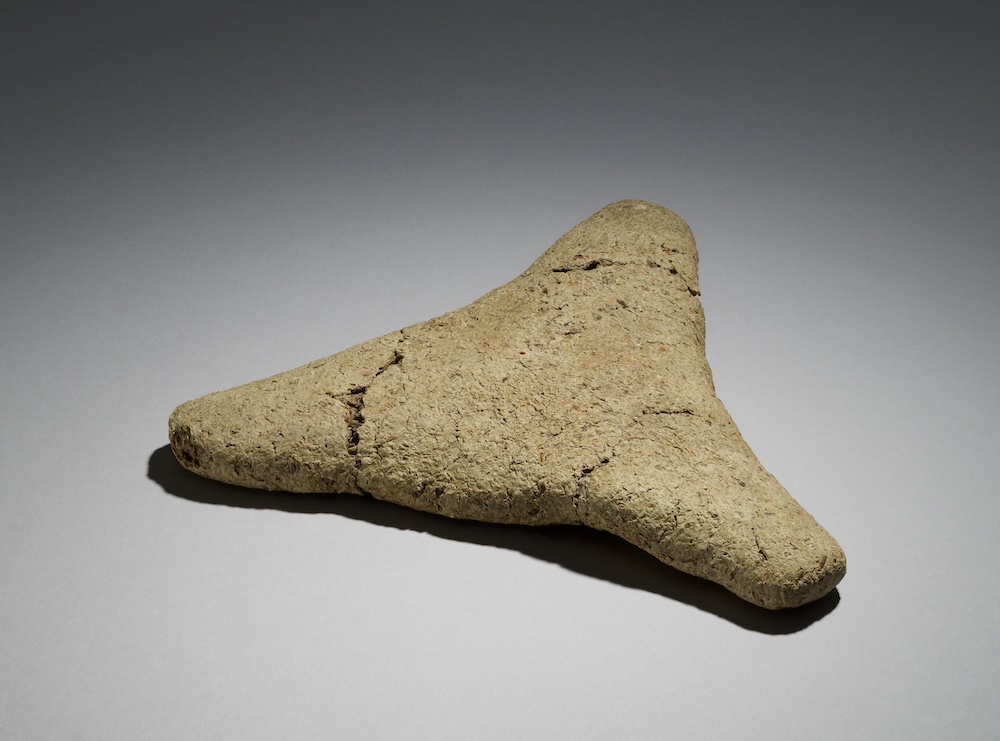
In ancient Greek, my experience in the museum would have been called thauma: a “wonder” or “wonderment.” But it has a more complicated range of meanings than those translations suggest. Thauma was a loaded ancient catchword. At its simplest, it could describe the feeling of being amazed, as well as referring to the object that caused the amazement. That Egyptian bread was a thauma itself, and it also left its young viewer in a state of thauma.
Some wonders are on a grand or even cosmic scale: the pyramids, showers of meteorites or eclipses of the sun, for example. For me it was the wonder of the ordinary—and those moments of feeling almost unbelievably close to people who lived thousands of years ago—that sparked my excitement in the deep past. Ever since, this has underpinned my life as a classicist (the word commonly applied since the nineteenth century to those who study the ancient Greeks and Romans). Above all, there is something wondrous—thaumatic, you might say—about our relationship with the classical world.
I am happy to admit I did not at first thrill to the established “greats” of classical literature and art. Don’t get me wrong. Over the years, that has changed, and those greats have helped me to reframe and refresh how I understand the modern—as well as the ancient—world, in ways I could hardly have thought possible. I don’t believe that I would now reflect on conflicts of gender in the way that I do if I had not been encouraged (and in high school occasionally forced) to think carefully about the figure of Medea in Euripides’ play, who murdered her children to exact revenge from her faithless, slime-bag husband; or about Virgil’s Dido in the Aeneid, who took her own life when abandoned by her lover Aeneas, as he refused to allow passion to divert him from the call of “duty.” And decades ago, it came as an unforgettable surprise to discover that some of the most powerful critiques of Roman imperialism were penned by Romans themselves. No one has summed up the effects of empire more sharply or succinctly than the Roman historian Tacitus: “They make a desert and call it peace” (in Latin just five words, ubi solitudinem faciunt pacem appellant). But I would be lying if I claimed that my first visceral engagement with the ancient world came from Euripides, Virgil, Tacitus, or, for that matter, the Parthenon sculptures.
It came instead from the day-to-day, humdrum, intimate, and memorably dirty side of the classical past. But thauma does not stop there. Among its range of ancient meanings was another, more surprising and more cerebral one. For thauma also signaled intellectual puzzles and problems that engaged the brain, and made you wonder (here English shares some of this double sense with Greek) about what exactly the object of amazement was, what it meant, and how to explain it. Both Plato and his fellow philosopher Aristotle, looking back from the fourth century bc to the origins of Greek intellectual enquiry a few hundred years earlier, argued that thauma kick-started philosophy itself. “It’s because of thauma that people embarked on philosophical thinking in the first place,” Aristotle insisted. For him wonderment was not something that stood in the way of hard thinking (though some ancient and modern writers have held that view); it was almost a precondition for it.
This version of thauma opens up bigger theoretical questions about the very nature of the past and our experience of it: How close we can ever get to antiquity? How can we access the lives of those who came before us? What does it mean to come face to face with history? How can we ever begin to make sense of it all? As Plato and Aristotle might have put it: what kind of enquiry is our enquiry into deep antiquity? The classical world, wherever you find it, is both wonderfully familiar and tantalizingly inaccessible, or at least not quite what it seems. For me, classics has offered a powerful way into those dizzying questions of how to pin down our relationship to the past. That’s another reason why I’ve never been able to leave the subject alone.
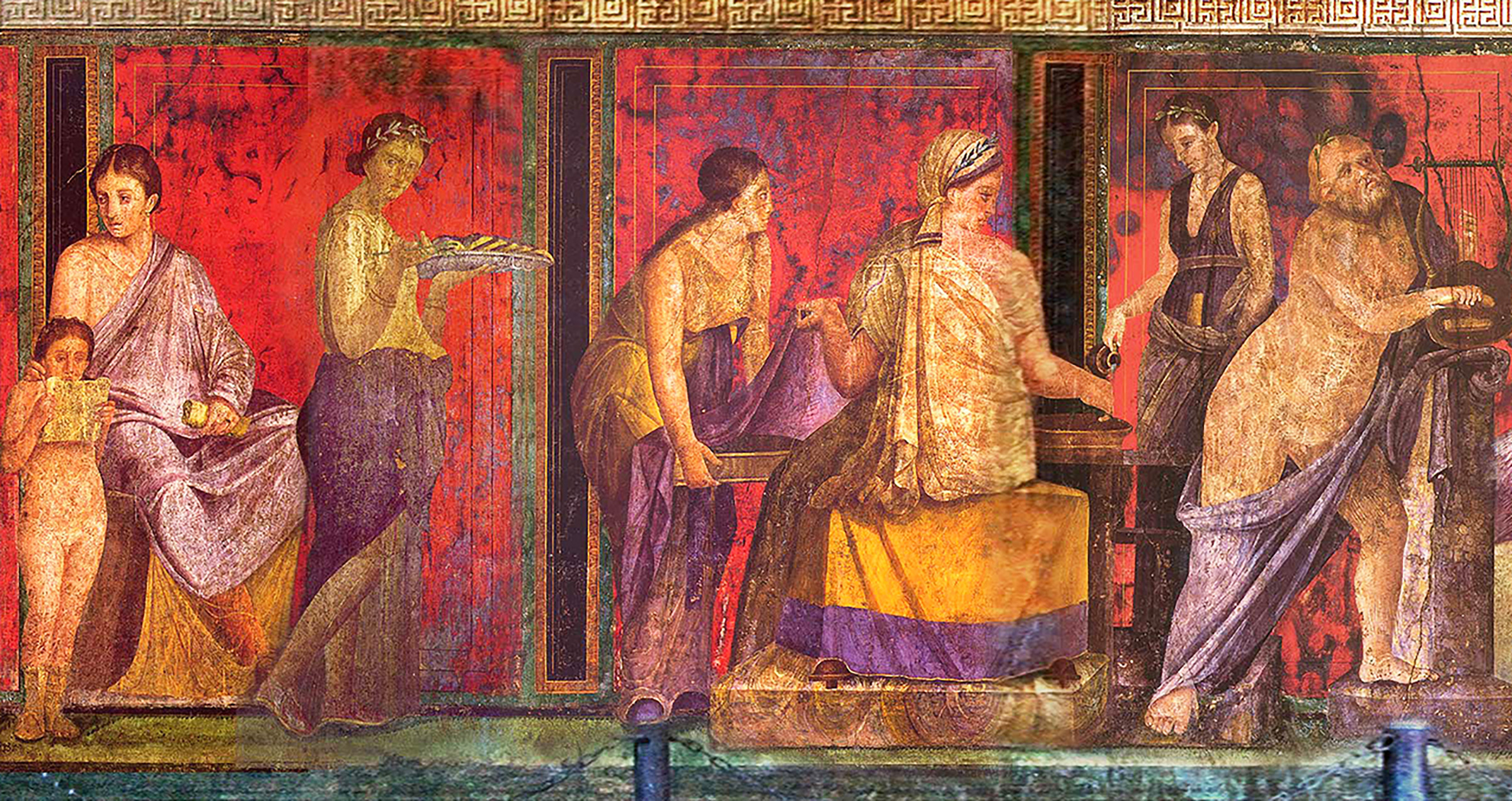
One place where you can most vividly experience the thauma of the ordinary is Pompeii, and its neighbor Herculaneum, also destroyed by the eruption of Vesuvius in the year 79. Pompeii and Herculaneum are not, as they are often claimed to be, simply “frozen in time,” their inhabitants suddenly overwhelmed by the volcano as they went about their business as usual, not suspecting a thing. The good news for the people of Pompeii and Herculaneum was that there was plenty of warning of the impending disaster, and many, possibly most, of them had packed up and left (leaving behind only an assortment of the over-optimistic, the bloody-minded, and possibly the frail). That said, these towns are where we can most easily catch sight of men and women from the distant past, at their most unawares, not always on their best behavior (sometimes literally with their pants down), in their most unchoreographed, breathtaking, and occasionally poignant ordinariness.
I am thinking, for example, of the elegant graffiti carefully scratched next to a lavatory in a house near the beach at Herculaneum: “Apollinaris the doctor of the emperor Titus had a good shit here” (Apollinaris medicus Tìti Impe(ratoris) hic cacavit bene in its straightforward Latin). Unless this is a joke at the expense of the imperial doctor faked up by another ancient user of the facilities (as some unnecessarily cynical academics suspect), it looks as if we can follow Apollinaris right onto the lavatory where, just before the eruption, he couldn’t resist leaving his name and a boast of his bowel movements. I am thinking, too, of the mother’s hand rocking a baby’s wooden cradle, also from Herculaneum, which was found still containing a tiny skeleton on a thin mattress stuffed with leaves. And I am thinking of the team of—carefree, dim, or dogged—painters who were still working on some new decoration in one house in Pompeii on the morning of the eruption itself. We have no idea what happened to them in the end (and I rather doubt that this would be good news). But at a certain point, they obviously decided to run for it, almost mid-brushstroke, abandoning their tools (including the compasses which they had been using to draw neat circles), more than fifty little paint pots, mixing bowls, and jars of plaster. It even looks as if, in their dash for the door, they knocked a bucket of plaster off a ladder, splattering it against the unfinished wall (unless it was the force of the eruption that sent it flying).
Of course, it would be a very thin version of history that was composed wholly of such fleeting vignettes. If we want to understand the ancient world, we do need to think about the elite as well as the ordinary, about how they chose to present themselves in art and literature, and about the power and politics that are the backbone of most traditional historical narratives. We need to think about what the ancients did and said, not only when they were unawares, but when they were trying to make their mark on the future and had one eye on us. We were already in the mind of the Greek historian, Thucydides, for example, who confidently and correctly predicted that his account of the dreadful “Peloponnesian War” between Athens and Sparta in the fifth century bc would be “a possession for all time” (though he could never have imagined a time as distant as our own, let alone readers such as we are). Nonetheless, glimpsing the people usually hidden from history, taking a peek into the past when it is least expecting us, catching it off its guard, has always been mind-blowing for me.
I shall also never forget the time when I was allowed to rock that cradle at Herculaneum, any more than I shall forget the bread in the British Museum. And, except where they are essential (delicate Roman leather shoes, for example, would not survive too much human fingering), I shall continue to resist the blue gloves that threaten to get between me and my close encounters with the past. But I have also come to see that this encounter is not quite so simple as it can sometimes feel when I’m padding round Pompeii and sitting down in the ancient bars or, for that matter, trying out the lavatories for size.
Part of that comes down to the perilous fragility of our connections with ancient history, sometimes hanging by the narrowest of threads. Only a volcanic eruption (combined with centuries of hard archaeological work) has delivered to us the cradle and the doctor’s graffiti. Just think how easily it could have been otherwise.
Even more to the point is the fact that we never do (and never can) bridge the gap between us and them. The wondrous, breathtaking, up-close ordinariness of the ancients never quite dispels the equally wondrous distance that will always separate their past from our here and now. I confess that I have come dangerously close to implying that the ancients were just like us, and that, if only we pick the right spot (or the right texts), we can enjoy direct, almost unmediated, access to them. And I have been half-hinting that they are at their most wondrous, and affecting, when we can recognize ourselves in them. In part, that is true.
If you take modern visitors or television viewers away from the lofty “greats” of classical culture and show them the seedy bars or the family quarters of Pompeii and Herculaneum, they will almost always be taken aback by the familiarity. There is huge pleasure, and something of a relief, in recognizing common humanity across the centuries. At the same time, those people from the ancient past were utterly different too, in ways that are now almost impossible to comprehend—and we can only pretend that this is not so. One big intellectual buzz of antiquity is that it is unforgettably under our noses and, simultaneously, further away than we can ever imagine, almost out of our grasp.
How familiar can the people of the deep past ever be? We can rock their cradles, enjoy their scurrilous graffiti, or—to leave aside the ordinary for a moment—read the emperor Marcus Aurelius’ night-time musings, his Meditations. And yet there is an almost endless list of the ways in which they were also unthinkably alien, sometimes almost incomprehensible.
For a start, they lived under the sway of entirely different forces from those we understand, and they were governed by entirely different assumptions of what was right or wrong, possible or impossible, certain or uncertain. This is not just a matter of big overarching structures or the grand scheme of things: the oppressive hierarchies of slavery and gender, for example, and the (to us) alien assumptions about the geography and shape of the planet or the path of the sun and stars, important as those are. It goes right down to everyday ideas about the body, the self, and the family, and to such basic questions as “Who am I?’” Don’t forget that most people in antiquity would have had no clue what they looked like, except from their wavering reflection in a pool of water or from a dull outline on a piece of polished bronze or silver. They would have had no way of proving who they were (no wonder so many ancient jokes hinged on issues of mistaken identity). Just occasionally, I am stopped in my tracks by the shocking “otherness” of it all. One unforgettable papyrus from the first century bc contains the text of a letter from a husband to his pregnant wife: “If it is a girl,” he writes matter-of-factly, “throw it away.” This is not just an example of callous cruelty, though it might in part be that. It shines a light on the fuzzy ancient boundary between (as we would term it) contraception, abortion, and infanticide. Of course, that can be an area of deep controversy for us. But when we now debate so intensely at what point an unborn fetus counts as a human being, with the rights that go with that status, it is worth remembering—even if with horror—that for some Romans, at least, that point did not come until sometime after birth, when a father chose either to “recognize” the baby, or not (“to throw it away”). There is, I suppose, a social logic there. But could we ever understand what it would be like to think that?
This is where, as the ancients saw, thauma requires brain work as well as wide eyes. Wondering what the past is, how to describe it, treading the tightrope between the idea that the inhabitants of the ancient past were just like us and the idea that they were incomprehensibly alien, pushes us to the very frontiers of understanding. I shall probably seem like a parody of an academic if I say that I struggle on those frontiers most days. But you can’t write about the ancient world without thinking hard about how to reconcile the familiarity of the past with its baffling strangeness, how to figure out what human beings have in common, as human beings, across time, or, for that matter, what right you have, from the safety of the here and now, to cast judgment upon those born 2,000 years ago. It gets you nowhere simply to find the past guilty of not being like the present. But at the same time, you cannot just abandon your ethics at the study door. And you cannot have a conversation with the classical past if you allow yourself no voice in that conversation at all. Is it really off-limits to make some ethical judgment over murderous gladiatorial games, gruesome crucifixions, or mass enslavements? The point is to try to understand and evaluate antiquity both through ancient eyes and through modern ones.
But how exactly do you balance the two? And how will we look in 2,000 years? And how will they in the future judge us, when we are past?
Adapted from Talking Classics: The Shock of the Old by Mary Beard, published by the University of Chicago Press. Copyright © 2026 by Mary Beard Publications Ltd. Reprinted with permission of the author and University of Chicago Press. All rights reserved.